DeFi on Ergo
Decentralized Finance With Strong MEV-Resistance and Open Access
Core Idea
"DeFi designed for users, not extractors."
Ergo's approach to DeFi is fundamentally different from account-based chains like Ethereum. Built on the eUTXO model, Ergo reduces several common DeFi failure modes: boxes make state explicit, transaction effects are easier to reason about before signing, and common account-model MEV patterns such as sandwiching are harder to execute. Transaction fees are typically predictable before submission, but dApp design, oracle design and mempool behavior still matter. This is not a magic shield; it is a structural advantage for building fairer DeFi.
Why Ergo Is Different
While account-model DeFi often exposes users to global-state ordering games, Ergo's eUTXO model creates a more analyzable environment. Transactions reference specific boxes (UTXOs), which reduces the surface for common reordering attacks. Oracle Pools provide decentralized price feeds without a single publisher. And because Ergo is PoW with fair launch, there is no VC allocation or validator-governance layer controlling the base protocol.
Key Differentiators
MEV-aware by design: eUTXO reduces common front-running and sandwich patterns, but dApp and mempool design still matter
Predictable fees: users can see the fee before signing; typical simple transactions remain low-cost
Deterministic execution: transactions either fully succeed or fully fail
Decentralized oracles: Oracle Pools reduce reliance on a single data publisher
Fair launch: no VC allocation, no insider advantages
Start Here
Essential resources to understand the fundamentals.
Build With It
Developer documentation, patterns, and guides.
Philosophy & Narrative
The vision and principles behind the technology.
Recommended Reading
Deep-dive articles to master this topic.
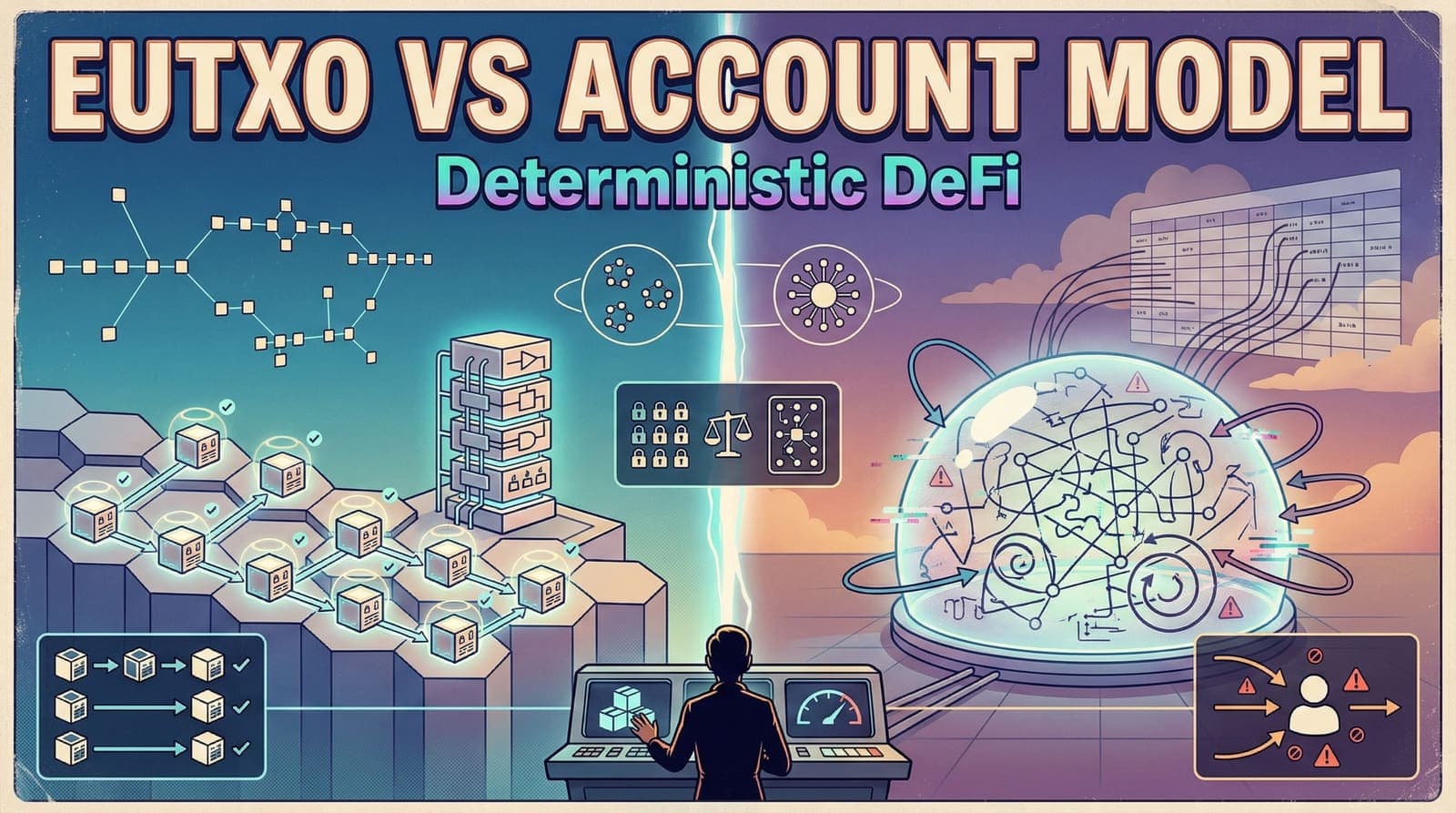
Technology
Two Blockchain Models: Why Ergo Chose Differently
Deterministic execution, explicit state transitions, and auditable privacy patterns — how Ergo's eUTXO model differs from Ethereum's account model for secure, scalable DeFi.
T
Technical Team8 min readIntermediate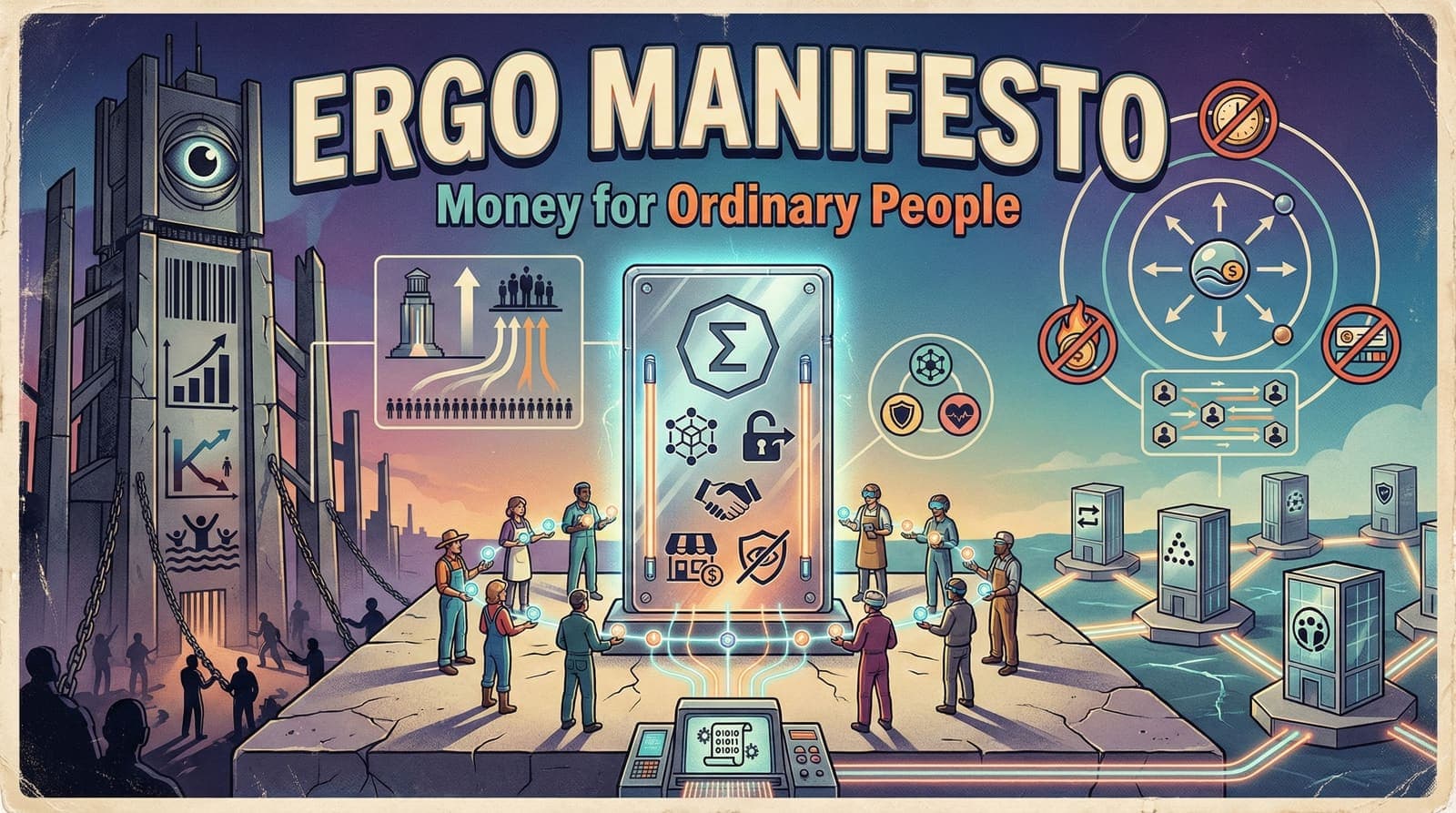
Vision
The Ergo Manifesto: Ergonomic Money for Everyone
The foundational vision of Ergo Platform by Kushti - creating decentralized financial tools that empower ordinary people. A manifesto for true peer-to-peer economic freedom.
K
Kushti10 min readBeginnerVisual Guides
Infographics and visual explanations to share.


Key Terms
Essential vocabulary for understanding this topic.
Common Questions
Frequently asked questions about this topic.
Ready to dive deeper?
Join our community to ask questions, share ideas, and connect with other Ergo enthusiasts.