Build a DeFi App on Ergo
From concept to testnet prototype, then audit-gated mainnet planning
Ergo's eUTXO model removes several common DeFi vulnerability classes — including the protocol-level reentrancy class — while keeping transaction state explicit. Application-level bugs are still possible, so production deployments still need review, limits, and monitoring.
問題
Traditional DeFi on account-based chains is plagued by exploits, unpredictable gas costs, and MEV extraction. Developers spend more time on security audits than building features.
解決方案
Ergo's eUTXO model provides deterministic execution, removes the protocol-level reentrancy class, and reduces common MEV patterns. ErgoScript is expressive yet auditable, but production deployments still require careful review.
逐步指南
Learn how boxes, registers, and ErgoScript work together. This mental model shift is crucial for secure DeFi.
Related Resources
Articles
Architecture Tutorial: Build an AI Agent That Pays for API Calls on Ergo Testnet
An architecture tutorial for a paid API endpoint that an AI agent can call only after producing a verifiable Ergo payment receipt. Includes mock-mode (runnable without a wallet) and testnet-mode (with Nautilus / sigma-rust signing).
Mar 26, 202615 min read
Babel Fees: Supported Token Fee Paths on Ergo
Ergo's Babel Fees turn gas payments into an on-chain market, letting users cover transaction fees through supported token-to-ERG paths while miners still receive ERG.
Dec 14, 20259 min read
Infographics
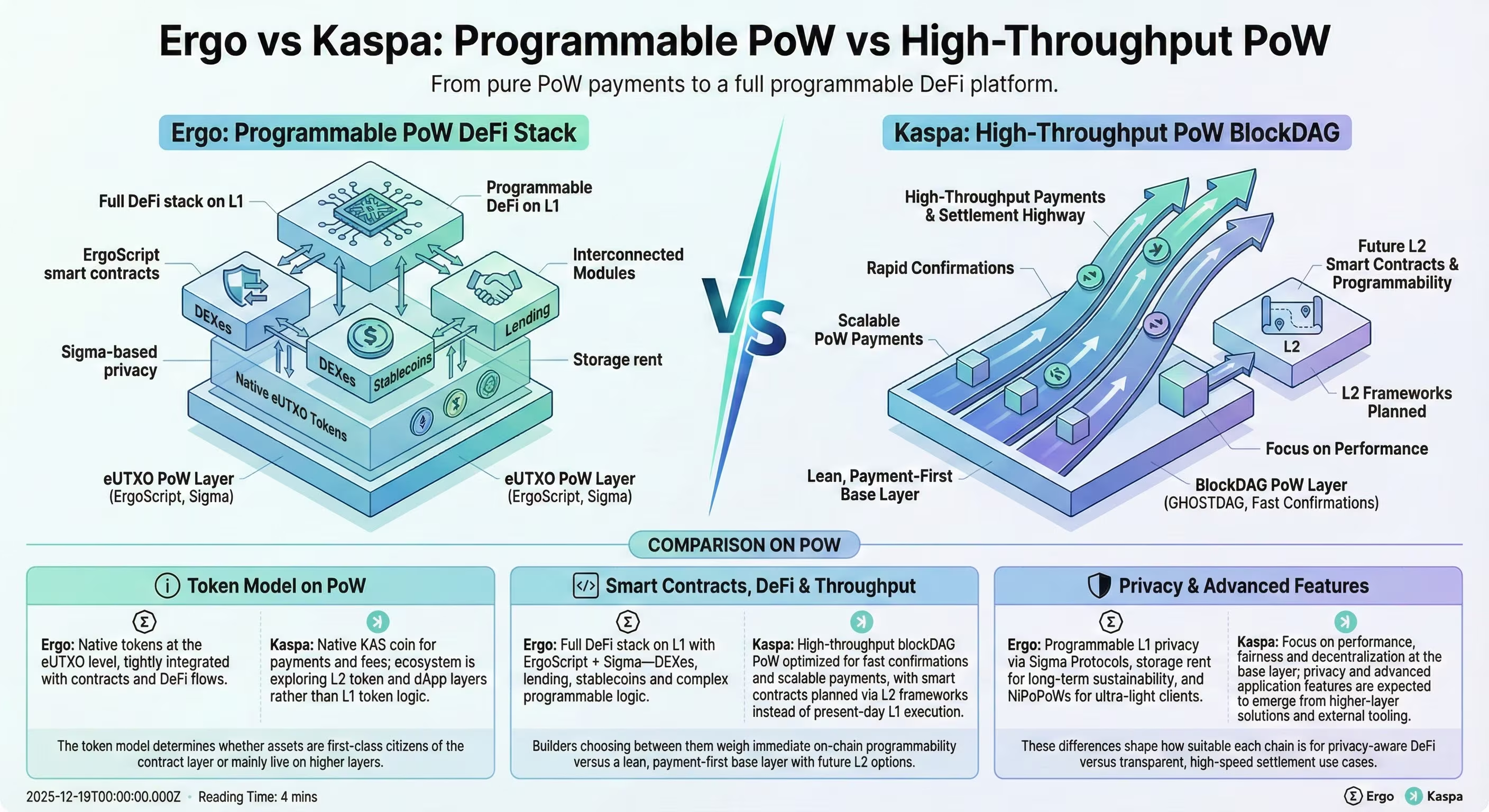
Ergo vs Kaspa: Programmable PoW vs High-Throughput PoW
Infographic comparing Ergo’s programmable eUTXO DeFi stack with Kaspa’s high-throughput PoW payments layer built on a BlockDAG.
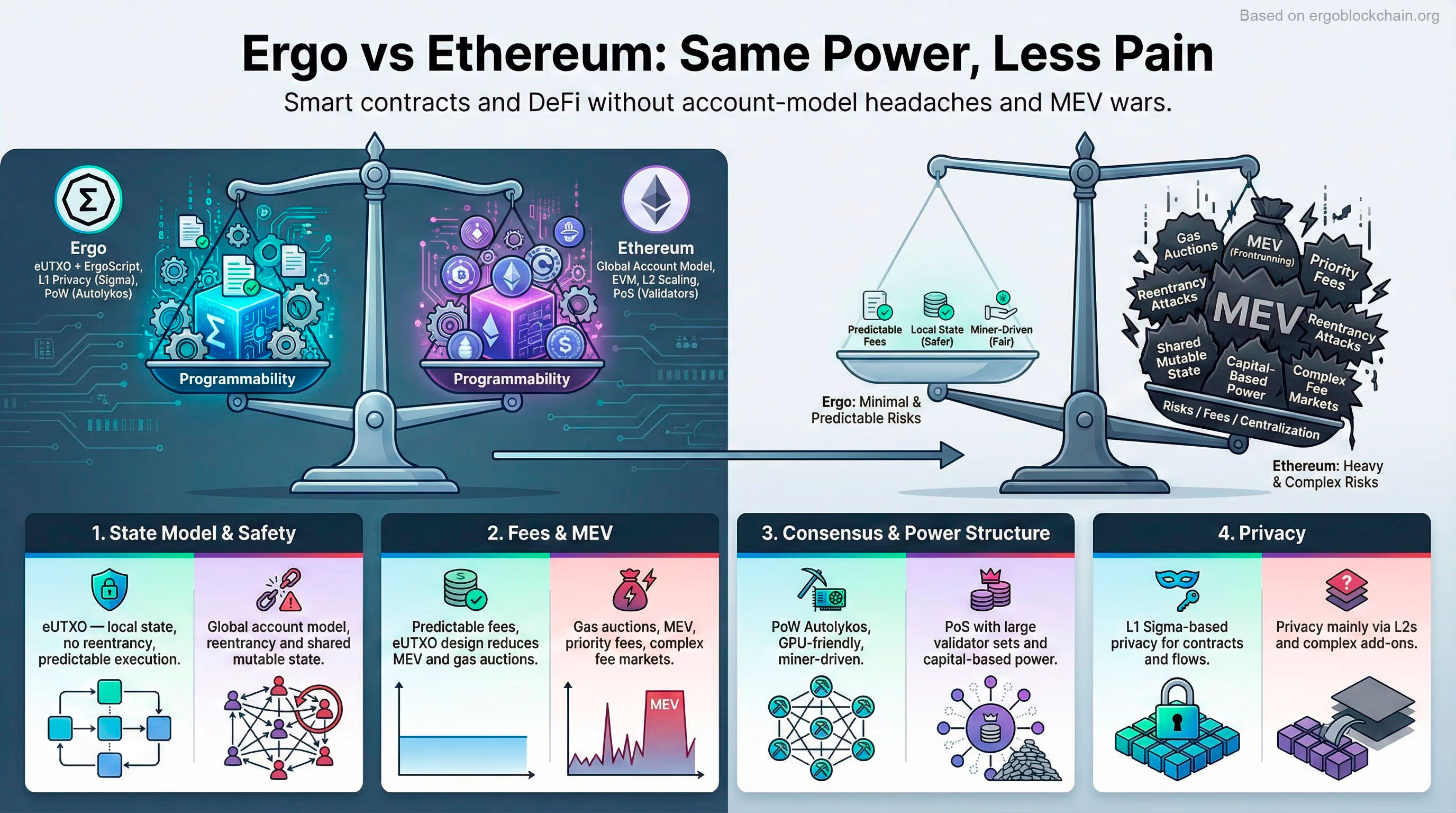
Ergo vs Ethereum: Same Power, Less Pain
Infographic comparing Ergo and Ethereum on state model, MEV and fees, consensus power structure and privacy, showing how eUTXO aims for similar programmability with fewer account-model headaches.
Case Studies
Spectrum Finance (historical)
Decentralized exchange built on Ergo's eUTXO model with AMM and order book functionality. Listed here as a historical reference: Spectrum Finance issued a formal sunset notice and the contracts have been frozen since Feb 2024.
Sunset; useful as a study of eUTXO AMM design — not an active venue.
SigmaUSD
Algorithmic stablecoin using the AgeUSD protocol with ERG-backed reserves. Verify current liquidity, reserve conditions, and venue status before use.
Early eUTXO stablecoin design; peg behaviour depends on reserve conditions, market depth, and user activity.