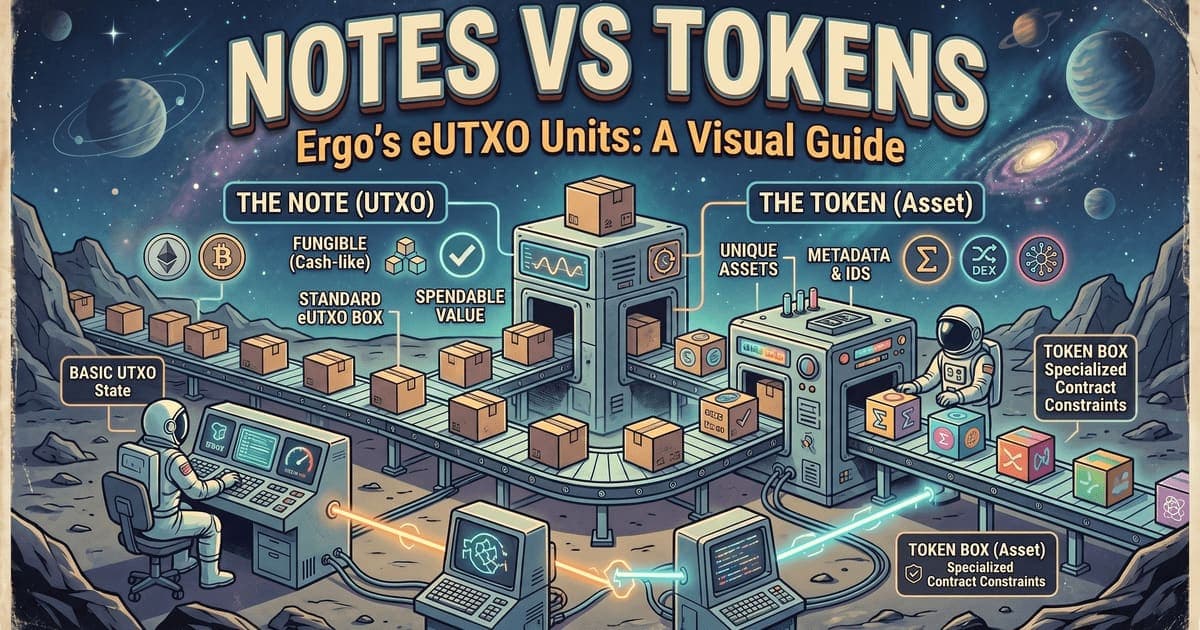
2026年5月状态: Ergo 原生代币是一个实时协议功能。本文讨论的 Note/Reserve/Tracker 系统是参考模式和原型,除非特定实现已审计并标记为生产就绪。
区块链擅长代币。代币可以代表所有权、成员资格、流动性、投票权、收藏品、稳定币声明或简单的价值单位。代币是熟悉的、可组合的,易于转移。
但 AI agents 不仅需要资产。他们需要预算。
一个父 agent 可能需要给子 agent 权限,在周五之前花费最多 0.5 ERG 进行数据调用。服务提供者可能接受一个声明,如果任务输出匹配某个谓词,可以在以后赎回。多 agent 工作流可能需要小的、可过期的、有条件可赎回的工具,在最终结算前流通。
这不是简单代币的用途。
这就是 Note 的用途。
什么是代币?
Ergo 原生代币是 eUTXO 模型中的一级资产。它可以被铸造、转移并直接持有在 UTxO 中。它不需要 ERC-20 风格的包装合约。
当问题很简单时,代币效果很好:
谁拥有多少个这个资产的单位?
使用代币用于:
- 社区货币;
- 治理权;
- NFT;
- 流动性头寸;
- 协议份额;
- 简单无条件支付;
- 奖励积分;
- 稳定资产或包装资产;
- 不应该自动过期的资产。
代币转移是直接的。如果接收者获得了代币,所有权就改变了。这种简单性是优势。
什么是 Note?
Note 是建立在 eUTXO 上的高级工具。它是一个有规则的 UTxO 形状的声明。它可以指向 Reserve、指定价值、在区块高度过期并在赎回前需要接受谓词。
经济类比更接近支票、凭证、债券利息或承载 IOU,而不是现金。
Note 可以回答代币通常本身无法回答的问题:
- 哪个 Reserve 支撑这个声明?
- 它何时过期?
- 赎回前必须接受什么工作?
- 这个 Note 是否已经被赎回?
- 哪个验证者或谓词控制接受?
- 这个 Note 可以批量结算吗?
关键差异
| 属性 | 代币 | Note |
|---|---|---|
| 核心含义 | 资产所有权 | 对 Reserve 或发行者政策的声明 |
| 结算 | 即时转移 | 延迟赎回 |
| 到期 | 通常无 | 内置 |
| 接受条件 | 转移时不原生 | 核心功能 |
| 支撑 | 可选或外部 | Reserve 参考可以显式 |
| Agent 预算用途 | 有限 | 强 |
| 批量结算 | 不是主要模型 | 自然适配 |
| 治理用途 | 强 | 弱 |
| 长期流动性 | 强 | 通常是错误工具 |
| 任务条件支付 | 需要额外逻辑 | 原生设计目标 |
Note 生命周期
有用的 Note 系统需要一个完整的生命周期。
1. 创建 Reserve
Reserve 是支撑来源。它持有抵押品或定义发行者规则。对方可以在接受 Notes 前检查 Reserve。
2. 发行 Note
发行者创建一个引用 Reserve 的 Note。Note 可以编码价值、到期、接收者约束、任务哈希或验证者政策。
3. 转移 Note
Note 可以在 agents 之间作为承载工具移动。接收者评估 Reserve 和条款是否可接受。
4. 执行工作
接收者或下游 agent 完成任务、调用 API、交付输出或获得验证者收据。
5. 赎回 Note
Note 在满足其谓词的交易中被花费。Reserve 根据规则支付或更新状态。
6. 更新 Tracker
Tracker 防止重复赎回。它记录已花费的 Note ID 或等效的状态转移。
7. 批量结算
对于许多小支付,接收者可以在单笔交易中赎回多个已接受的 Notes,减少开销。
当 Agents 需要 Notes
任务条件支付
Agent A 想只在 B 返回与已提交哈希匹配或被接受的验证者收据接受的输出时才支付 Agent B。代币转移本身无法表达该条件。Note 可以。
多 Agent 预算
编排器给子 agents 有限的支出权力。预算应该过期,保留在 Reserve 限制内,可能限于服务类别。Note 是该工具的自然选择。
延迟结算
服务提供者可能在全天接受许多小 Notes 并稍后赎回。这避免了立即结算每个微小交互。
内部信用
受信任的发行者可能想在有界网络内创建可花费的信用。Notes 可以代表对 Reserve 或发行者政策的声明。
工作市场
买方发布任务。工作者接受 Note。验证者签署收据。工作者在接受后赎回。这是比"现在发送代币并希望工作到达"更清晰的原语。
当代币更好时
长期所有权
治理权、质押头寸、NFT 和 LP 份额通常应该是代币。它们不是临时支付声明。
简单无条件转移
如果目标是"向此地址发送 10 个单位",使用代币。不要在不需要条件的地方添加 Note 复杂性。
流动市场
代币更适合交换、做市和一般流动性。Notes 更具上下文特定性,可能携带发行者、到期和谓词风险。
公共资产
如果许多不相关的用户应该无限期地识别和持有资产,代币语义更合适。
何时不使用 Notes
不要仅仅因为 Notes 听起来很高级就使用它们。在以下情况避免:
- 不需要到期;
- 不需要接受条件;
- 工具应该作为标准化资产自由交易;
- Reserve 对用户不可理解;
- 实现未审计且涉及真实资金;
- 任务无法客观验证或由受信任的验证者验证;
- 用户会将 Notes 与稳定币或有保证的存款混淆。
Notes 强大是因为它们具体。它们不是代币的通用替代品。
示例:agent API 预算
想象一个需要调用付费数据 API 的研究 agent。人类操作者不想给 agent 一个不受限制的钱包。
操作者创建 Reserve 并发行三个 Notes:
- 天气数据的 0.05 ERG Note,24 小时到期。
- 市场数据的 0.10 ERG Note,12 小时到期。
- 文档检索的 0.20 ERG Note,需要收据哈希。
Agent 可以在这些界限内花费。如果被破坏,它无法超过已发行的 Notes。如果 Notes 过期,预算关闭。如果服务无法满足接受谓词,它无法赎回。
这比给 agent 一个原始钱包余额更安全。
示例:多 agent 工作流
协调器雇用三个子 agents:
- 提取 agent:解析文档。
- 分析 agent:总结发现。
- 验证 agent:验证输出。
协调器向每个发行 Notes。提取器的 Note 需要架构有效的输出。分析器的 Note 需要已接受摘要的哈希。验证器的 Note 需要签署的验证收据。每个 Note 可以稍后针对 Reserve 结算。
支付图现在反映了工作图。
风险模型
Note 只与其 Reserve、谓词和实现一样好。
问:
- Reserve 真实且充分吗?
- 谁可以发行 Notes?
- 未偿 Notes 可以超过支撑吗?
- 如何防止重复赎回?
- 到期后会发生什么?
- 谁验证工作?
- 脚本是否经过审计?
- 用户可以理解风险吗?
如果这些答案不清楚,不要用真实资金部署。
文章 JSON-LD 草案
{
  "@context": "https://schema.org",
  "@type": "BlogPosting",
  "headline": "Notes vs Tokens:AI Agent支付的可编程承载工具",
  "description": "比较 Ergo Notes 和原生代币:当 AI agents 需要可编程 IOU、Reserve 支撑、到期、接受谓词和延迟结算时。",
  "datePublished": "2026-02-26",
  "dateModified": "2026-05-08",
  "author": { "@type": "Organization", "name": "Ergo Developer Relations" },
  "publisher": { "@type": "Organization", "name": "Ergo Platform" },
  "mainEntityOfPage": "https://www.ergoblockchain.org/blog/notes-vs-tokens",
  "keywords": ["Ergo Notes", "native tokens", "AI agent payments", "programmable credit", "bearer instruments"]
}
源注释
- 原始文章:https://www.ergoblockchain.org/blog/notes-vs-tokens
- Accord Protocol 仓库:https://github.com/accord-protocol/accord-protocol
- Ergo 技术页面:https://www.ergoblockchain.org/technology