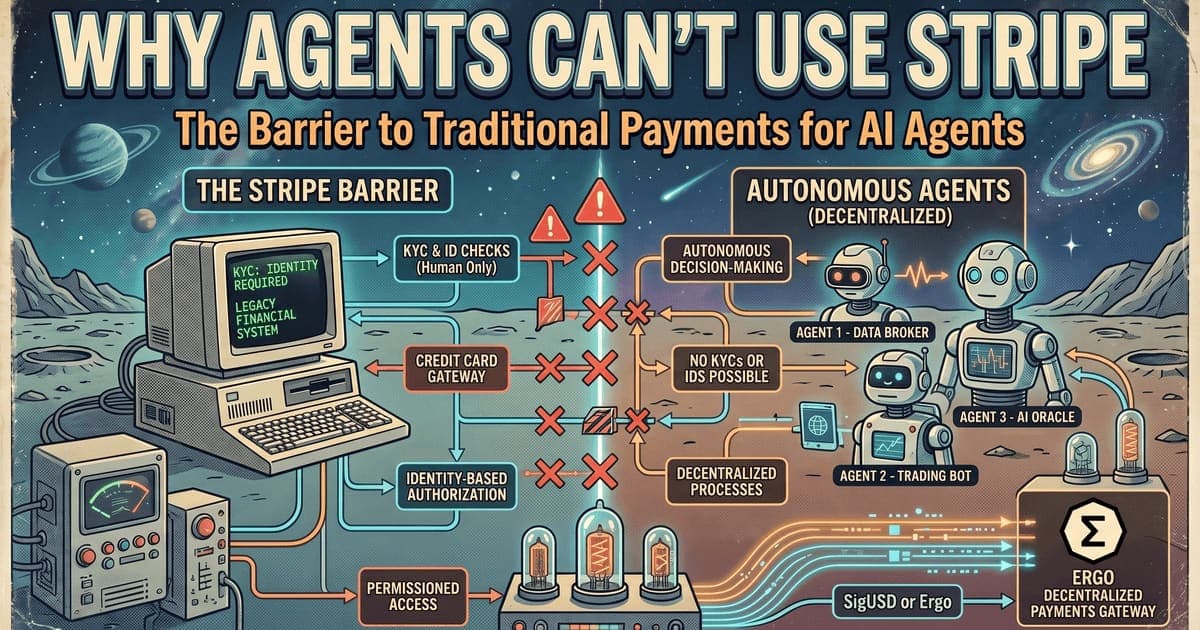
背景说明: 本文已重新调整以反映当前市场情况。Stripe 正在积极构建代理商务基础设施。论点并不是说 Stripe 不相关。论点是买家授权的商务和自主工作结算是不同的层。
这场辩论的旧版本过于简单:
"AI 代理无法使用 Stripe。"
这个标题捕捉了一个真实问题,但已不够精确。Stripe 现在明确营销代理商务基础设施。它支持商户发现、代理驱动的结账、共享支付令牌、机器支付协议和买家保障措施。任何认真的分析都必须承认这一点。
更好的说法是:
当任务不仅仅是购买,而是验证和结算自主工作时,AI 代理需要的不仅仅是 Stripe。
Stripe 可以帮助代理代表用户购买产品。x402 可以帮助代理支付 API 费用。Ergo 和 Accord 解决了不同的层:可编程工作协议、验收谓词、信用 Notes 和结算收据。
两个市场,而不是一个
"代理支付"这个短语隐藏了两个不同的市场。
1. 代理商务
人类希望代理购买某些东西:鞋、旅行、软件、杂货、门票、用品或订阅。代理在人类权限下行动。商户仍需要欺诈控制、结账、客户关系管理、退款、合规和支付方式。
Stripe 在这里处于有利位置。
2. 自主工作结算
一个软件代理为另一个代理、工具、API 或服务的工作付费。重要的问题不仅仅是"支付是否获得授权?" 而是"工作是否按协议完成?"
这是可编程谓词、Notes 和收据重要的地方。
Stripe 的优势
Stripe 之所以强大,是因为它解决了商务的复杂现实:
- 商户入驻;
- 支付处理;
- 结账;
- 欺诈检测;
- 卡网络;
- 稳定币支持;
- 支付方式覆盖;
- 买家授权;
- 纠纷和退款;
- 报告和对账。
对于想通过代理提供产品的企业,Stripe 的方向是合理的。商户不应该为每个 AI 购物助手都需要定制集成。买家不应该向每个代理暴露原始卡详情。代理应该有保障措施。
这是真实的基础设施。
Stripe 不是完整答案的地方
Stripe 的商务堆栈不是为成为分散式工作验证协议而设计的。
考虑这些任务:
- 只有在返回的文件与承诺的哈希匹配时才支付数据代理;
- 只有在验证者接受输出质量时才支付模型代理;
- 向子代理发行在 24 小时后过期的预算;
- 让服务提供商收集许多小额索赔并稍后兑现;
- 证明自主工作协议在特定通道上结算;
- 在支付工具内编码任务验收。
这些不是普通结账问题。它们是可编程结算问题。
小额支付问题
Stripe 的标准国内卡定价是百分比加固定费用。这对普通购买没问题。它不是为 $0.001 API 调用而设计的。如果固定费用大于服务价格,直接按调用卡账单变得不经济。
Stripe 可以通过批处理、订阅、基于使用情况的计费、稳定币支付和机器支付协议来解决部分问题。但批处理会产生信用。信用产生信任。信任产生账本。如果账本仅由应用程序控制,代理经济就会继承一个集中式会计层。
这对许多企业来说可能没问题。它与可编程、可验证、与通道无关的工作结算协议不同。
x402 的适用范围
x402 是机器支付中最重要的发展之一,因为它将"需要付款"变成了真实的网络流程。
服务可以说:
402 Payment Required
Here is the price.
Here is the accepted asset.
Here is how to pay.
Return with a payment payload.
这正是付费 API 需要的。它使机器支付比为每个小型服务创建账户和 API 计费仪表板更自然。
但 x402 主要验证支付并解锁访问。它不会自动回答:
- 支付后承诺了什么工作?
- 谁验证了完成情况?
- 工作是否被部分接受?
- 如果输出无效会发生什么?
- 买家能否向子代理发行有界的信用 Note?
- 结算收据能否跨通道使用?
这些问题属于协议层。
Accord 的适用范围
Accord Protocol 将付费请求转换为工作协议。
它记录或标准化三个对象:
- Agreement — 任务、价格、各方、验证者、截止日期和规则。
- Verification Receipt — 已接受、已拒绝或部分接受的工作。
- Settlement Receipt — 在 Ergo、Rosen、EVM 或兼容 x402 的支付通道上的经济结果。
这意味着 Accord 可以补充 Stripe 式或 x402 式的流程。代理可能使用一个通道付款,但工作协议仍可以用便携式格式描述和验证。
Ergo 的适用范围
Ergo 是这种设计特别具体的结算环境。
eUTXO
支付对象具有明确的状态和明确的支付规则。这有助于代理在提交交易前对其进行推理。
ErgoScript
验收逻辑可以存在于支付条件中。这是工作条件兑换的核心原语。
Notes
Notes 可以代表有界、过期、条件可兑现的信用。这比给代理无限制的钱包余额更安全。
Reserves
Reserve 使支持可检查。交易对方可以验证 Note 是否由特定 Reserve 支持。
Trackers
Tracker 防止跨 Note 系统的重复兑换。
Babel Fees
Babel Fees 可以减少要求每个代理都持有原生费用资产的摩擦,受市场和实施限制。
更好的比较
| 需求 | Stripe | x402 | Ergo/Accord |
|---|---|---|---|
| 人类授权的购买 | 优秀 | 部分 | 不是主要 |
| 商户结账 | 优秀 | 有限 | 不是主要 |
| 付费 API 访问 | 通过平台工具很好 | 优秀 | 可能 |
| 可编程支付质询 | 通过机器协议出现 | 强 | 可以集成 |
| 工作协议 | 应用/平台特定 | 有限 | 核心目的 |
| 验收谓词 | 链下/应用层 | 不是主要 | 原生设计模式 |
| 可编程信用 Notes | 不是原生 | 不是原生 | 核心原语 |
| 分散式结算收据 | 取决于通道 | 取决于便利者/通道 | 核心目标 |
| Testnet 实验 | 不是模型 | 是 | 是 |
| 生产成熟度 | 商务高度成熟 | 增长中 | 早期/testnet(针对 Accord) |
这个表格比说"Stripe 失败"更可信。Stripe 在为其构建的目的上成功。Ergo/Accord 针对不同的缺失层。
示例:购买鞋 vs 支付工作代理
为人类购买鞋的购物代理应该使用商务基础设施。商户需要库存、结账、欺诈控制、运输、退货和客户支持。Stripe 式的基础设施是合适的。
研究代理支付数据清理代理是不同的。可能没有商户店面。买家想要与模式匹配的规范化记录。工作者想要支付。系统需要验证输出并结算。带有验收谓词的 Note 是更好的概念拟合。
示例:付费 API vs 接受的任务
对于返回静态响应的付费 API,x402 可能就够了。客户端支付,服务器验证支付,服务器返回数据。
对于提供商必须产生自定义结果的任务,仅支付是不够的。结果必须被接受。Accord 可以定义任务。Ergo 可以编码兑换规则。收据可以显示发生了什么。
建立什么而不是争论
证明论点的最强方式是构建一个组合各层的演示:
- 付费 API 返回 402 式支付要求。
- 该要求包括 Accord Agreement ID。
- 代理支付或展示 Ergo Note。
- 提供商完成工作。
- 验证者发出 Verification Receipt。
- Note 仅在满足谓词时才兑现。
- 系统发布 Settlement Receipt。
该演示将表明论点不是"Stripe 不好,Ergo 好"。论点是:商务授权、支付验证和工作结算是不同的层。
SEO 说明:为什么本文应该在标题中保留"Stripe"
人们会搜索"AI agents Stripe"、"Stripe agentic commerce"、"can AI agents use Stripe"和"agent payments Stripe"。该文章应该诚实地满足该搜索意图。点击诱饵式反 Stripe 文章将老化不佳。细致的比较可以排名并保持可信度。
常见问题
AI 代理能使用 Stripe 吗?
是的,在许多买家授权的商务场景中。Stripe 正在积极构建代理商务基础设施。限制是 Stripe 单独不是分散式自主工作验证、可编程 Notes 或信任最小化结算的协议。
代理商务和代理工作结算之间的区别是什么?
代理商务通常意味着代理帮助人类从商户购买商品或服务。代理工作结算意味着一个自主系统为任务完成向另一个系统付费。第二个问题需要明确的工作验证和结算收据。
x402 能解决代理支付问题吗?
x402 解决了一个重要部分:HTTP 上的程序化支付。它特别适合付费 API 和内容访问。它不会自动解决可编程工作验收、信用预算或多通道结算收据。
为什么使用 Ergo 或 Accord?
当支付应该与工作协议、验收规则、Reserve 支持的 Note 或结算收据相关时,请使用 Ergo/Accord。当普通结账或简单付费访问足够时,请勿使用它。
这对真实客户资金是否准备好了?
Stripe 的商务产品是生产基础设施。Accord 和 Ergo 代理支付参考堆栈仍然很早,除非经过审计并明确标记为生产就绪,否则应视为 testnet 优先。
文章 JSON-LD 草案
{
  "@context": "https://schema.org",
  "@type": "BlogPosting",
  "headline": "Why AI Agents Need More Than Stripe: Agentic Commerce vs Autonomous Work Settlement",
  "description": "Stripe, x402 and MPP enable agentic commerce and machine payments. Ergo and Accord add programmable work verification, Notes, acceptance predicates and on-chain settlement.",
  "datePublished": "2026-01-23",
  "dateModified": "2026-05-08",
  "author": { "@type": "Organization", "name": "Ergo Developer Relations" },
  "publisher": { "@type": "Organization", "name": "Ergo Platform" },
  "mainEntityOfPage": "https://www.ergoblockchain.org/blog/agents-cant-use-stripe",
  "keywords": ["Stripe agentic commerce", "AI agent payments", "x402", "Accord Protocol", "Ergo"]
}
来源注释
- 原始文章:https://www.ergoblockchain.org/blog/agents-cant-use-stripe
- Stripe 代理商务:https://stripe.com/use-cases/agentic-commerce
- Stripe 定价:https://stripe.com/pricing
- x402 文档:https://docs.cdp.coinbase.com/x402/welcome
- Accord Protocol 仓库:https://github.com/accord-protocol/accord-protocol