Smart Contracts
Beginner
What is
NFT (Non-Fungible Token)?
A unique digital token representing ownership of a specific asset, artwork, or item.
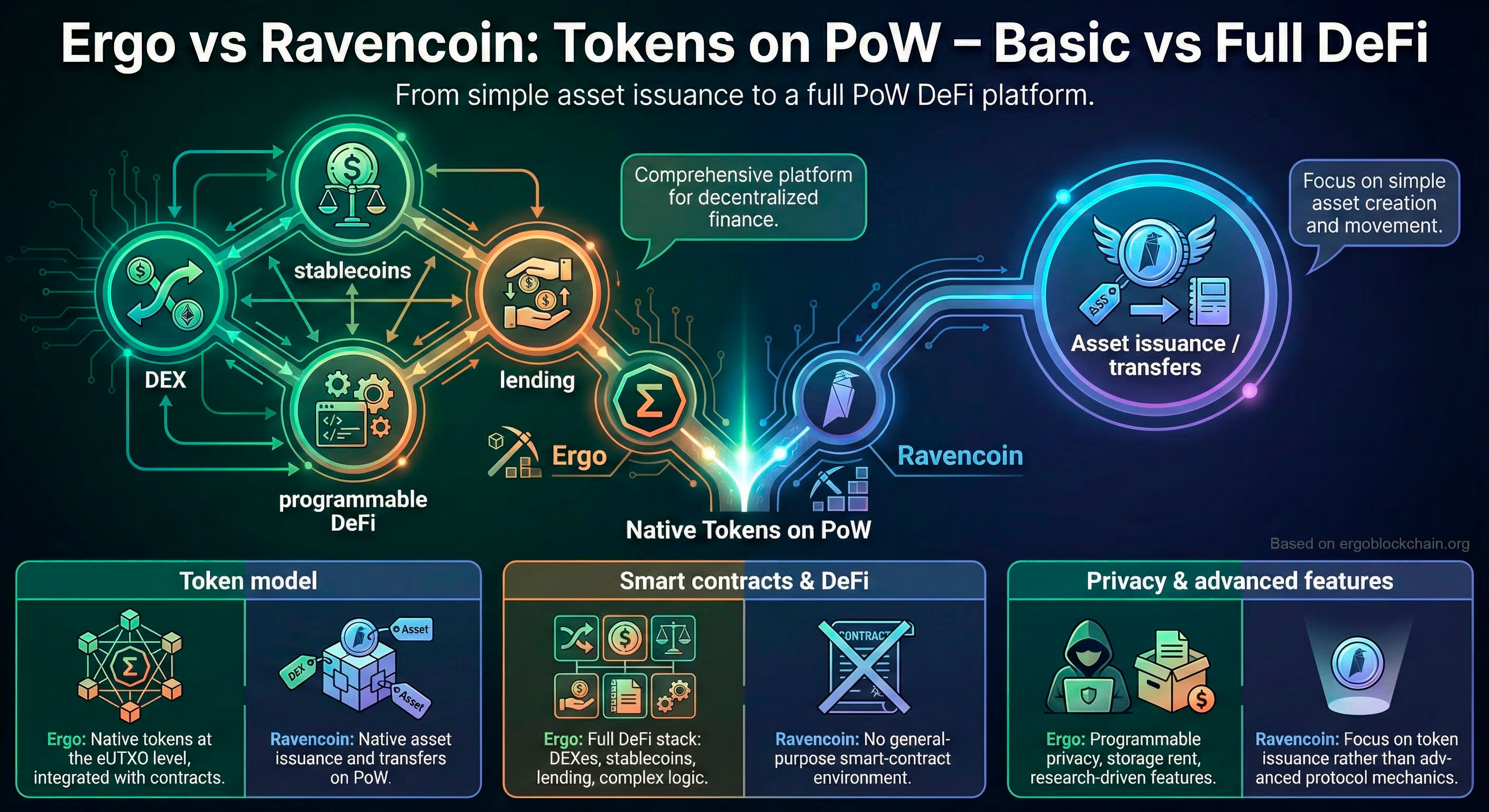
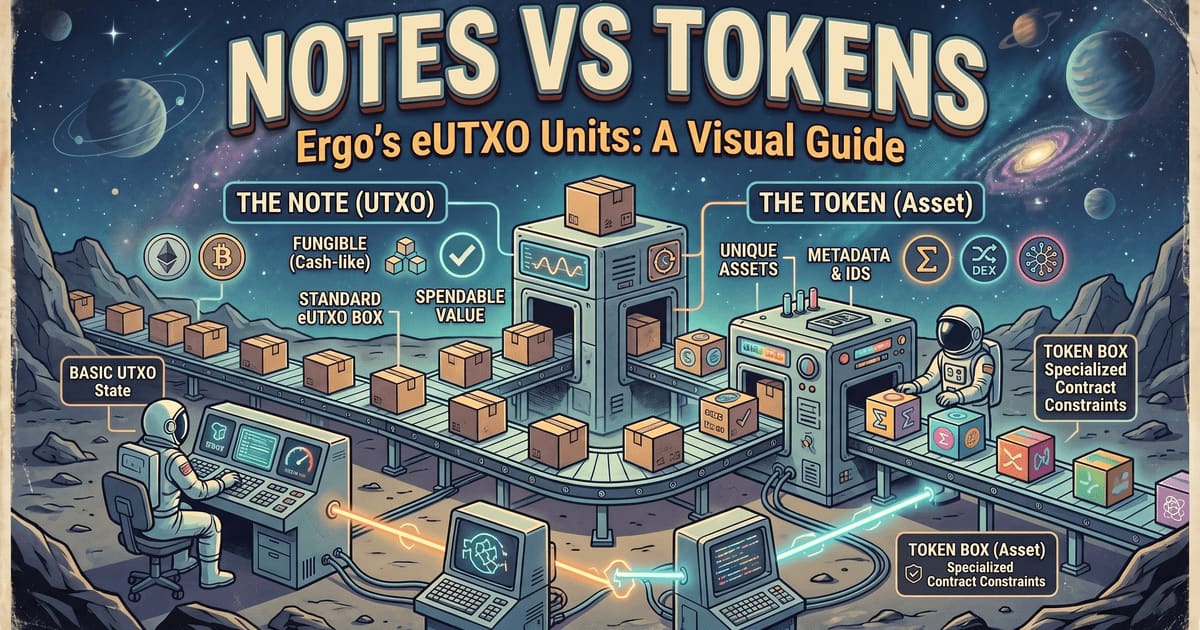
NFTs are tokens with quantity of 1, making each unique and non-interchangeable. On Ergo, NFTs are native tokens with special properties. They're used for digital art, collectibles, gaming items, and proof of ownership. Ergo NFTs benefit from low fees and native multi-asset support.
Key Points
- Unique tokens (quantity = 1)
- Native on Ergo protocol
- Low minting/transfer fees
- Can include metadata
- Used for art, gaming, ownership
- Marketplaces: SkyHarbor, etc.
Use Cases
1
Digital art and collectibles
2
Gaming items
3
Event tickets
4
Membership tokens
5
Real-world asset representation
Related Infographics
Related Articles
Frequently Asked Questions
Questions about NFT (Non-Fungible Token)
Common questions about this topic
What can I do with Ergo?
Ergo supports a broad ecosystem: use SigmaUSD, explore historical and current DeFi references, mix transactions with ErgoMixer where lawful, collect NFTs, mine with GPUs, bridge to other chains via Rosen, and build dApps with ErgoScript. Always verify current project status before sending funds to a third-party app.
Explainer
Getting Started
How to get started with Ergo?
Start by getting a wallet (Nautilus for browser, Terminus for mobile). Back up your seed phrase securely offline. Get some ERG from a current exchange or verified venue, then make a small test transaction. After that, explore NFTs, mining, DeFi references, or the developer stack if you're a builder.
How-to
Getting Started
What is ErgoScript and how does it work?
ErgoScript is Ergo's smart contract language - a Scala-based, functional language that compiles to ErgoTree for on-chain execution. Unlike Solidity, ErgoScript is not Turing-complete by design, ensuring predictable execution costs and easier formal verification. It's powerful enough for complex DeFi yet safe enough to audit.
Explainer
Technology
Is Ergo a good investment?
This is not financial advice. Ergo has strong fundamentals: fair launch (no VC dump risk), innovative technology (eUTXO, Sigma Protocols, NiPoPoWs), active development, and a cypherpunk ethos. It's a smaller market cap project with higher risk/reward than established chains. Research thoroughly, understand the technology, and never invest more than you can afford to lose.
Comparison
Getting Started