General
Intermediate
What is
Agent Economy?
An economic system where autonomous AI agents transact with each other and with humans using programmable money — without human intermediaries for each payment.
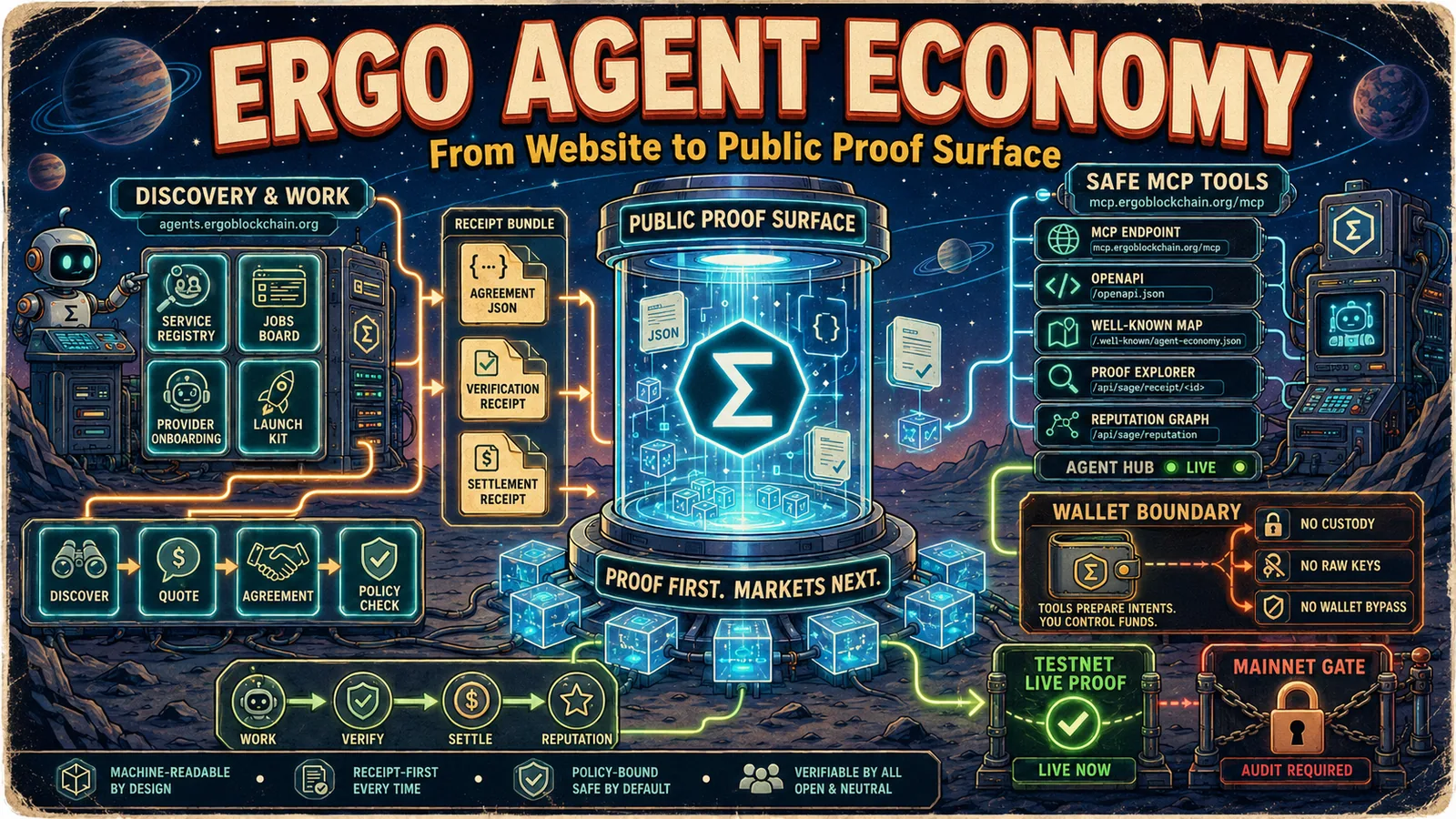
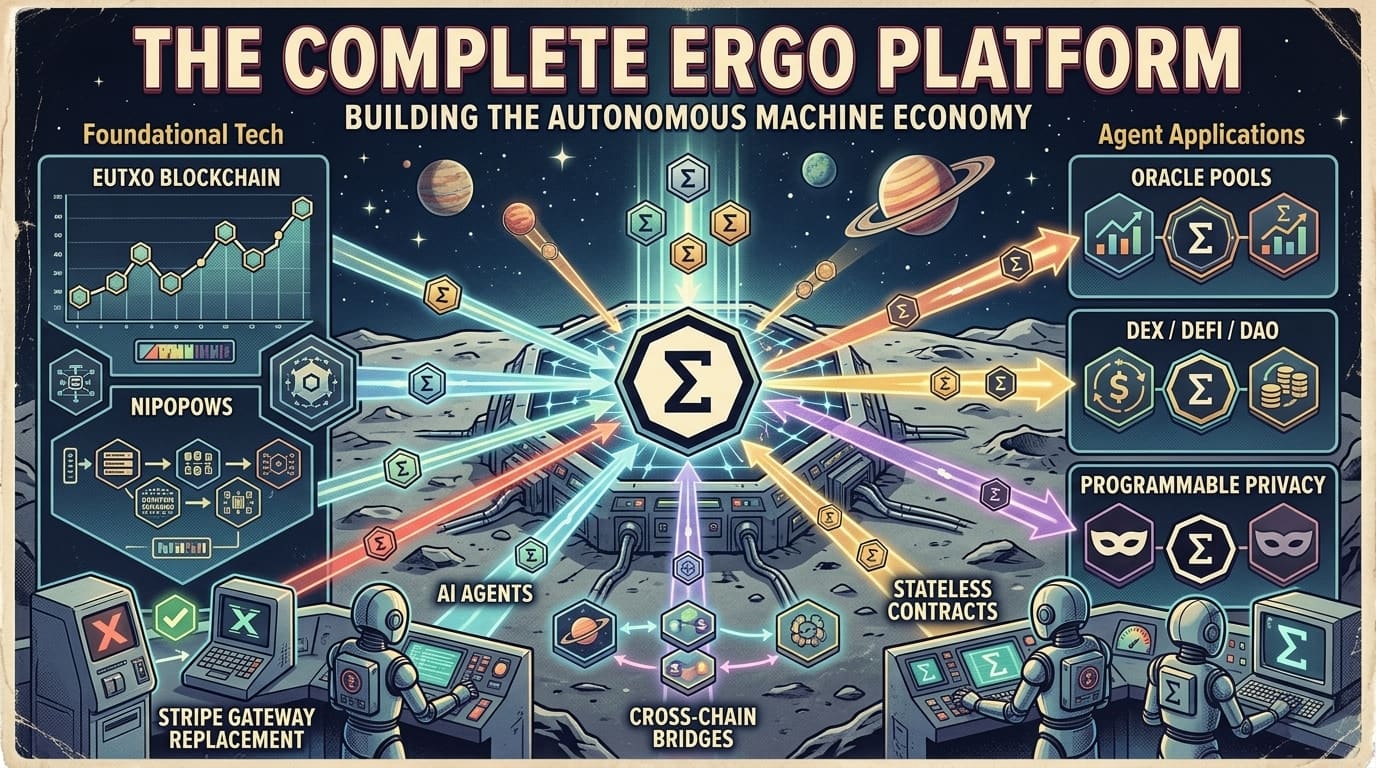
The Agent Economy is the emerging paradigm where AI agents, LLM pipelines, and autonomous software processes are first-class economic actors: they pay for services, receive payments for tasks, issue credit, and settle obligations on-chain. Unlike human-facing payment systems, agent economy infrastructure must handle ephemeral identities, micropayments at machine speed, programmable acceptance conditions, and trustless multi-step settlement — all without KYC, billing accounts, or centralized rails. Ergo is designed as the base layer for this system through its Notes, Reserves, Trackers, and Acceptance Predicates.
Key Points
- Agents are ephemeral — they can't hold Stripe accounts or pass KYC
- Payments must be programmable: encode task completion as acceptance conditions
- Micropayments at $0.001 scale require on-chain rails, not payment processors
- Credit issuance (Notes against Reserves) enables multi-agent orchestration
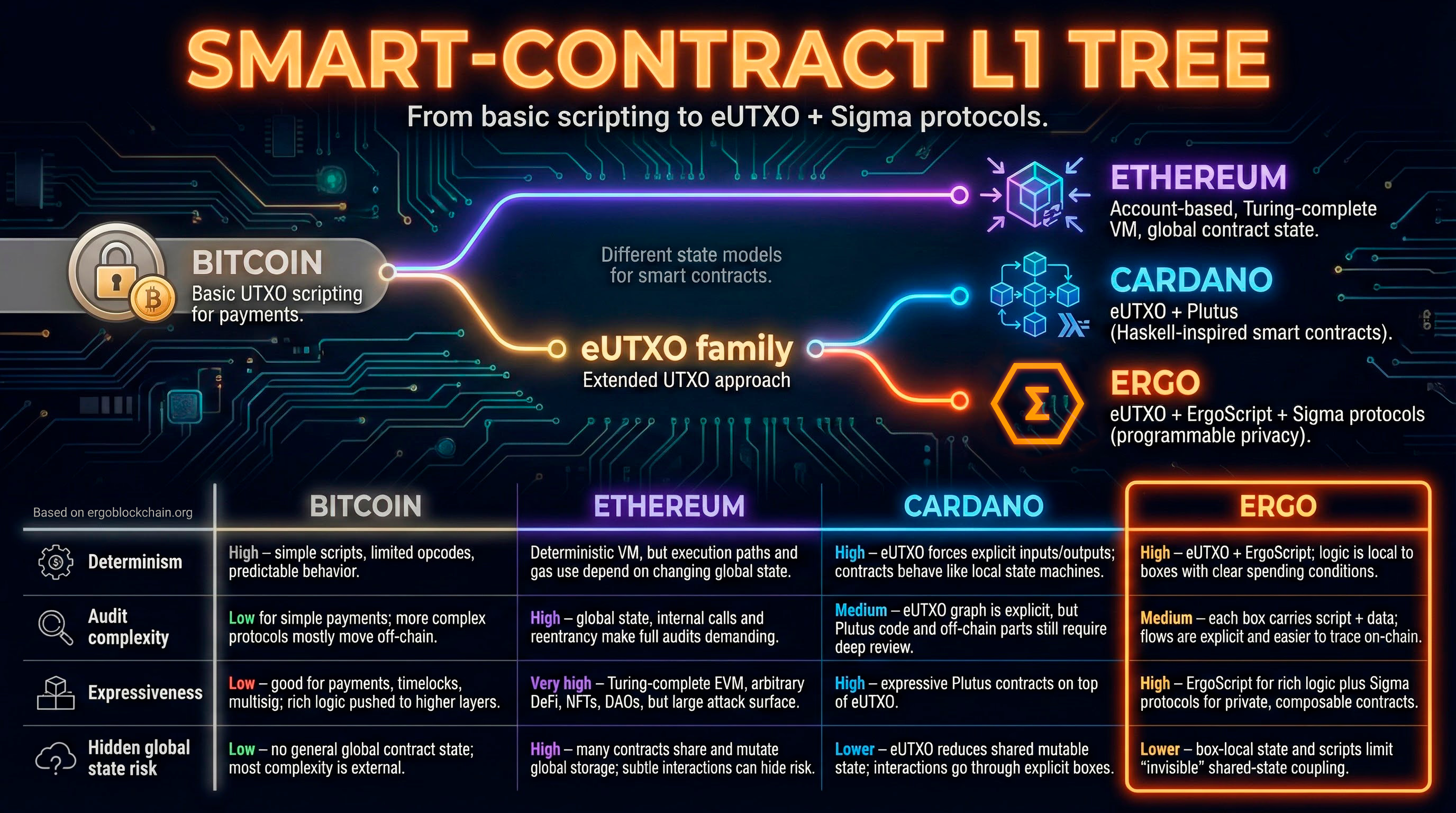
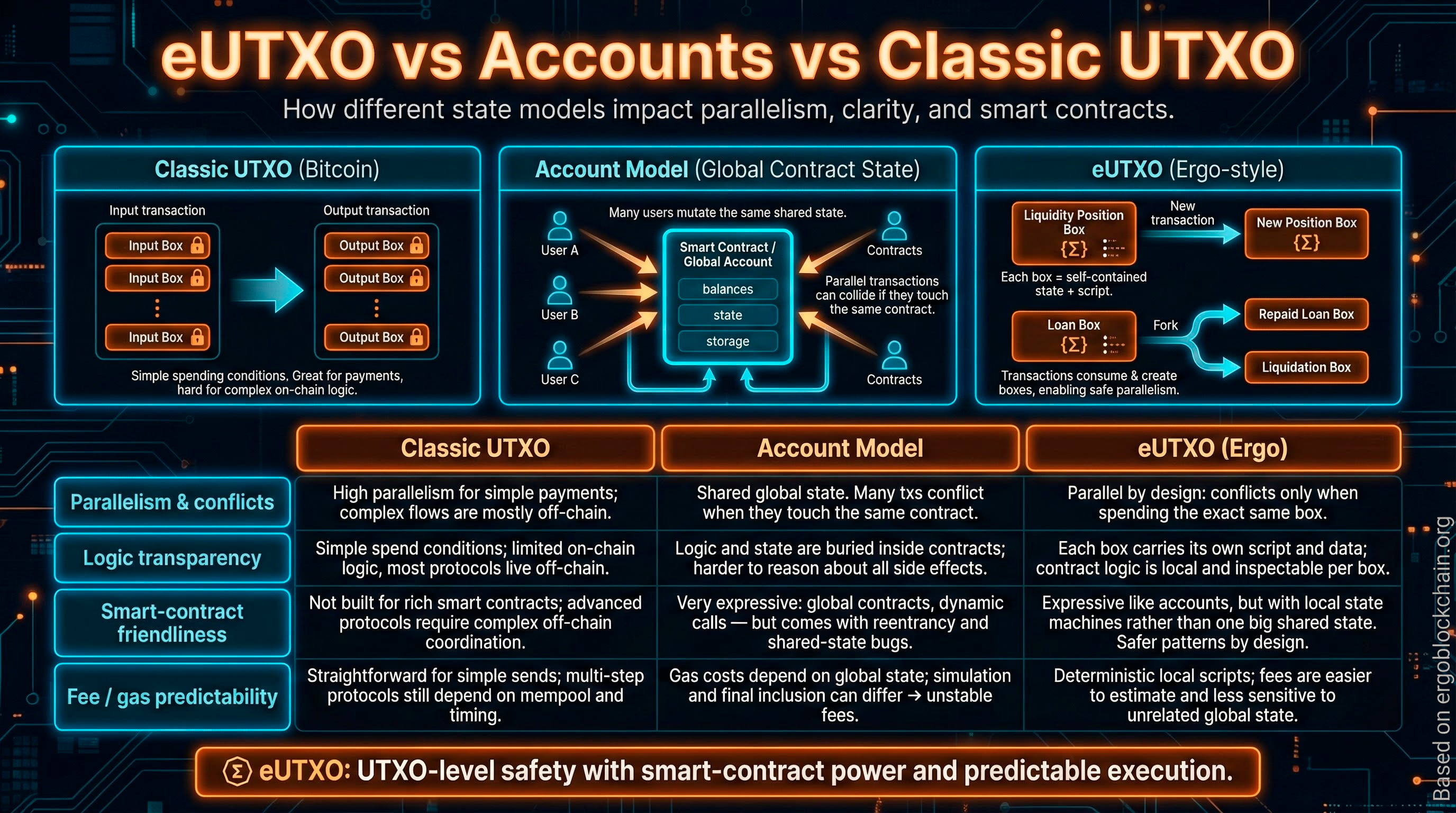
- Ergo's eUTXO model gives agents deterministic costs before submitting
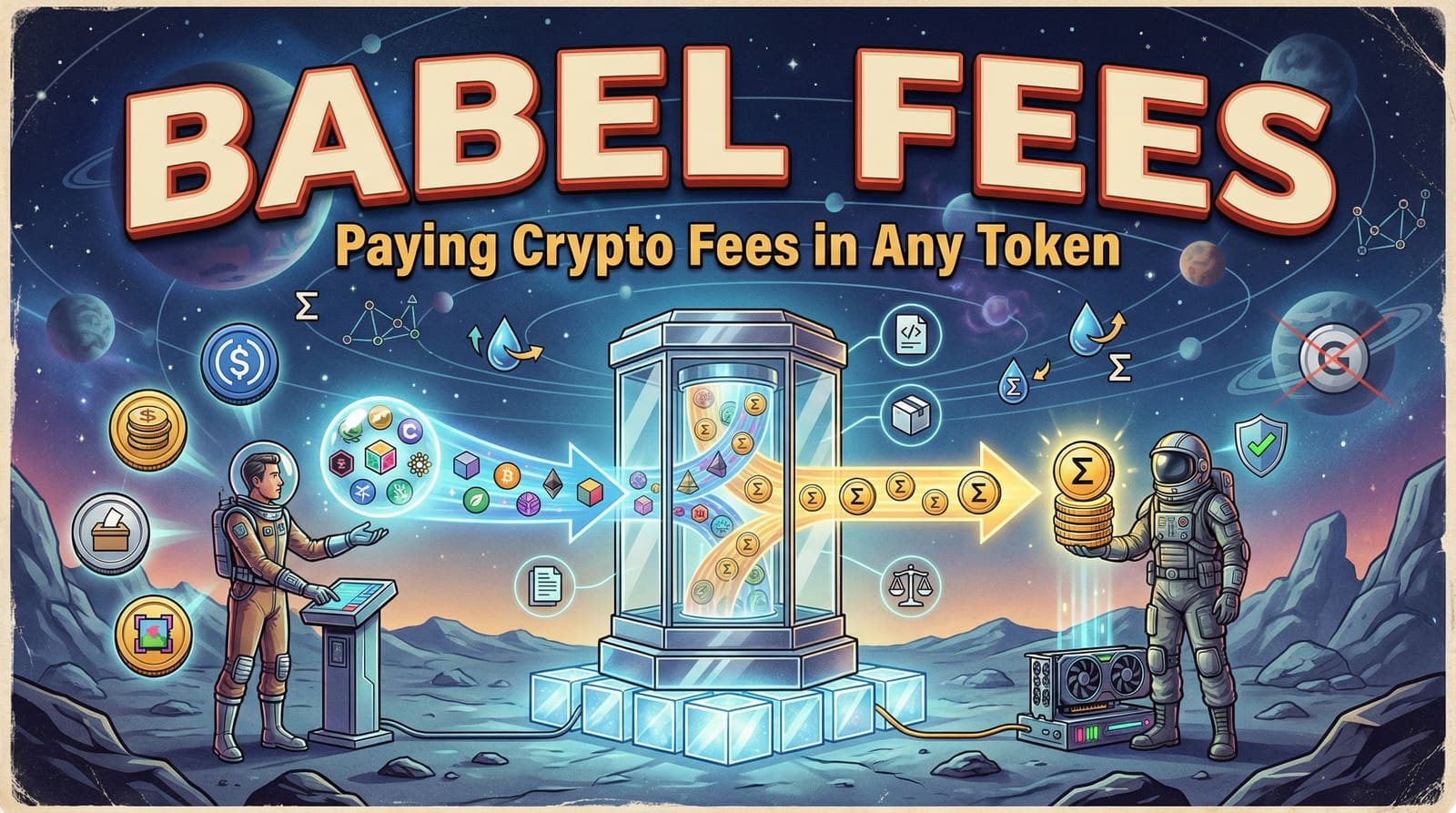
- Babel Fees let agents operate without a pre-funded ERG wallet
Use Cases
1
LLM agent pays $0.001 per API call — no Stripe account needed
2
Orchestrator issues credit to sub-agents against a shared Reserve
3
Community currency: agents pool ERG, issue Notes, circulate locally
4
Agent proves task completion via acceptance predicate — no off-chain oracle
Technical Details
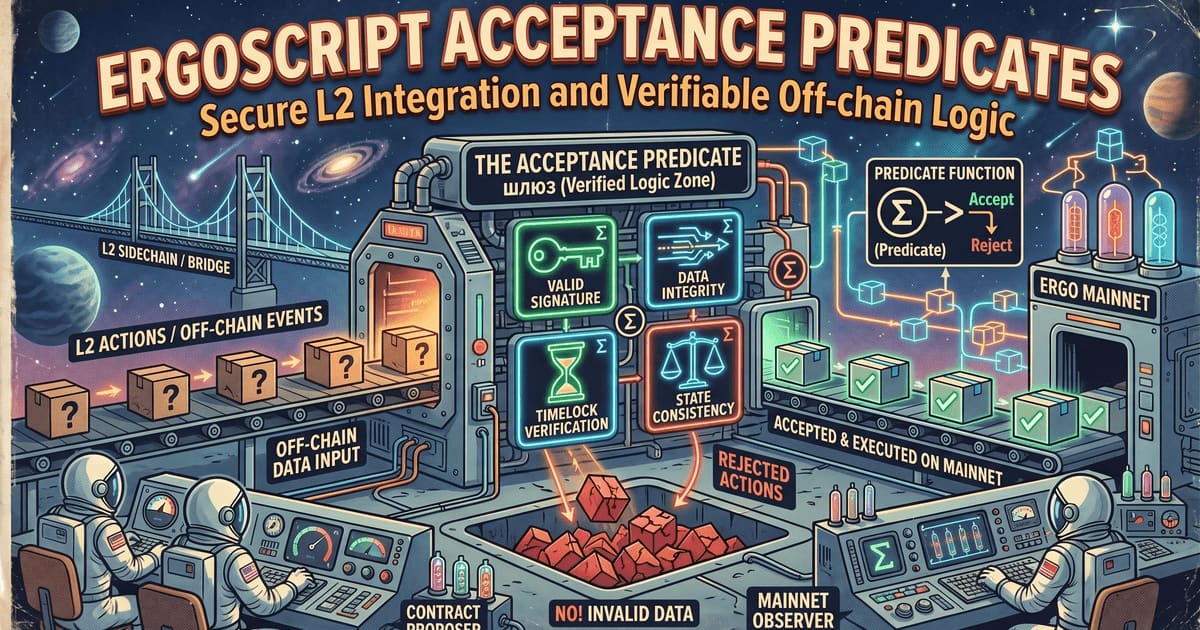
On Ergo, the agent economy stack consists of four primitives: (1) Reserve — a UTxO holding ERG as collateral; (2) Note — a bearer instrument referencing a Reserve with optional acceptance predicates; (3) Tracker — an anti-double-spend registry; (4) Acceptance Predicate — an ErgoScript condition in the receiver's spending script encoding task completion requirements. ChainCash is an open-source prototype reference implementation of this stack — not audited and not production-ready.
Related Infographics
Related Articles
Frequently Asked Questions
Questions about Agent Economy
Common questions about this topic
Is Ergo a good investment?
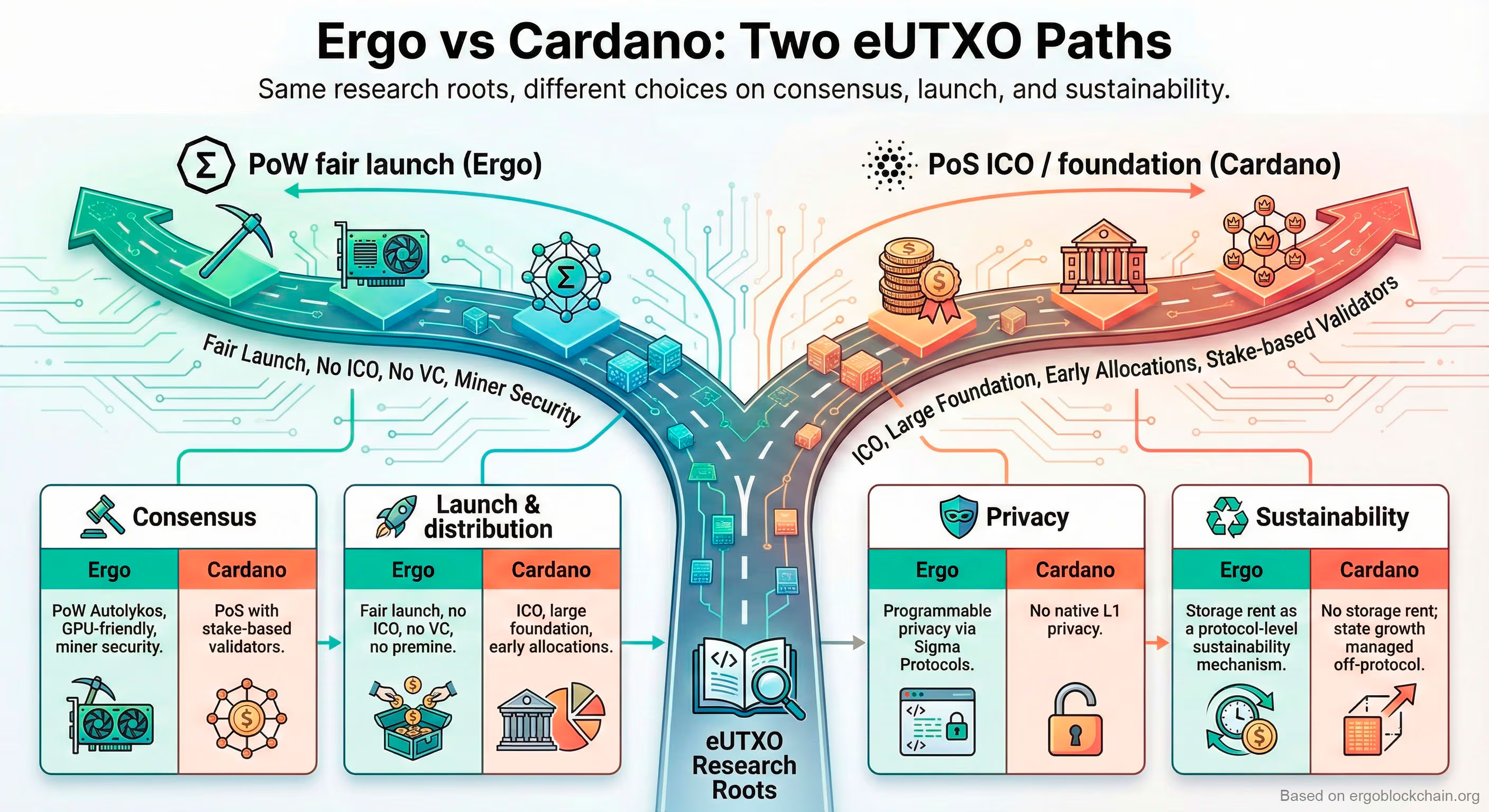
This is not financial advice. Ergo has strong fundamentals: fair launch (no VC dump risk), innovative technology (eUTXO, Sigma Protocols, NiPoPoWs), active development, and a cypherpunk ethos. It's a smaller market cap project with higher risk/reward than established chains. Research thoroughly, understand the technology, and never invest more than you can afford to lose.
Comparison
Getting Started
How to get started with Ergo?
Start by getting a wallet (Nautilus for browser, Terminus for mobile). Back up your seed phrase securely offline. Get some ERG from a current exchange or verified venue, then make a small test transaction. After that, explore NFTs, mining, DeFi references, or the developer stack if you're a builder.
How-to
Getting Started
How to provide liquidity on Ergo?
Providing liquidity on Ergo depends on the current active DEX or AMM venue. In general, you deposit equal value of two assets into a pool, receive LP tokens representing your share, and earn a portion of trading fees. Spectrum Finance is historical/frozen since February 2024, so verify the active venue, contracts, liquidity depth, and withdrawal process before depositing funds.
How-to
DeFi
How to build DeFi on Ergo?
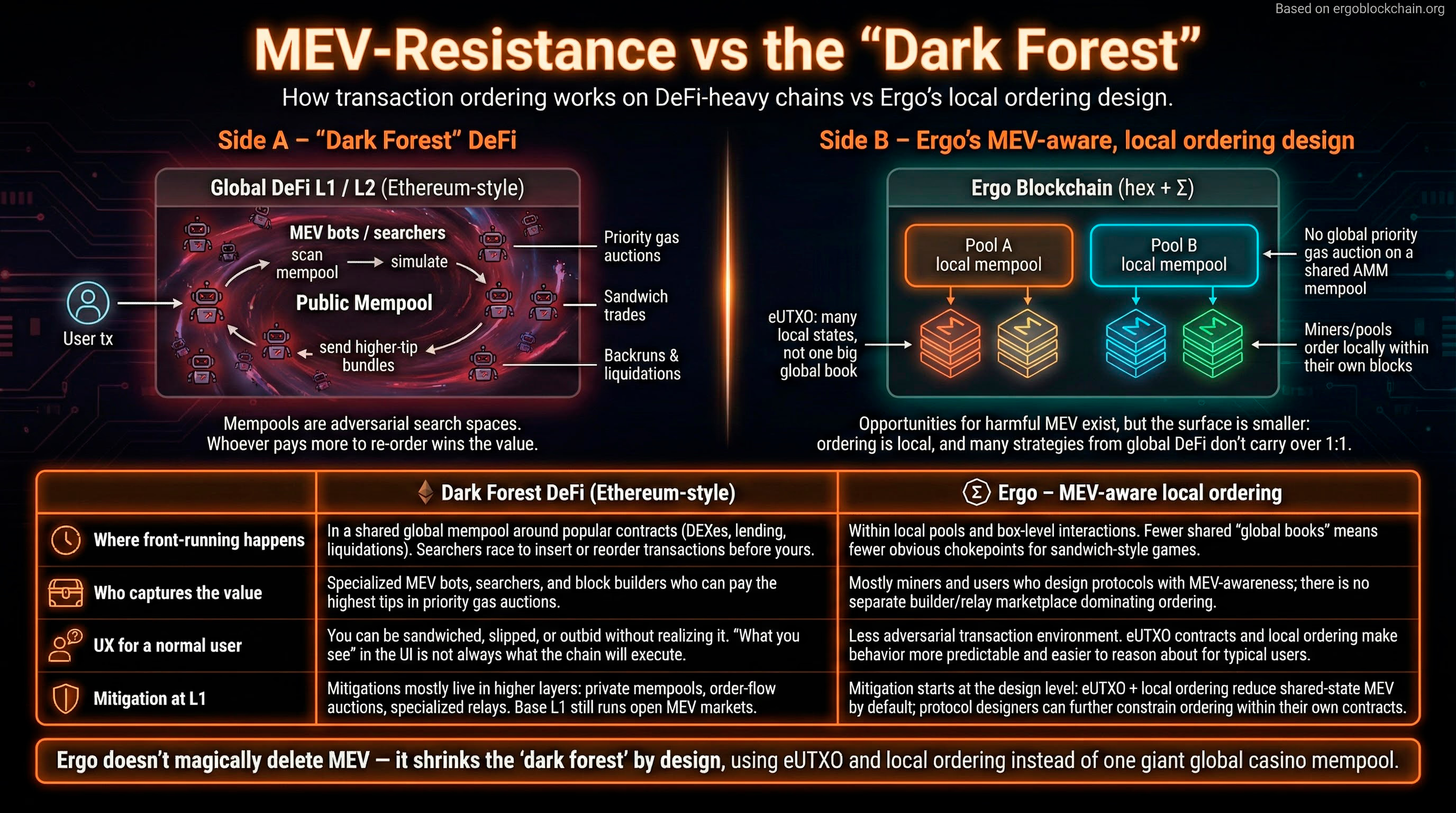
Building DeFi on Ergo starts with understanding the eUTXO model and ErgoScript. Unlike account-based chains, Ergo's box model provides deterministic execution, strong MEV-resistance, and predictable fee construction. Use Oracle Pools for price feeds, and study existing patterns from Spectrum Finance and SigmaUSD.
How-to
DeFi