Economics
Intermediate
Updated 11/26/2025
What is
Babel Fees?
A mechanism allowing users to pay transaction fees in tokens other than ERG, improving accessibility and user experience.
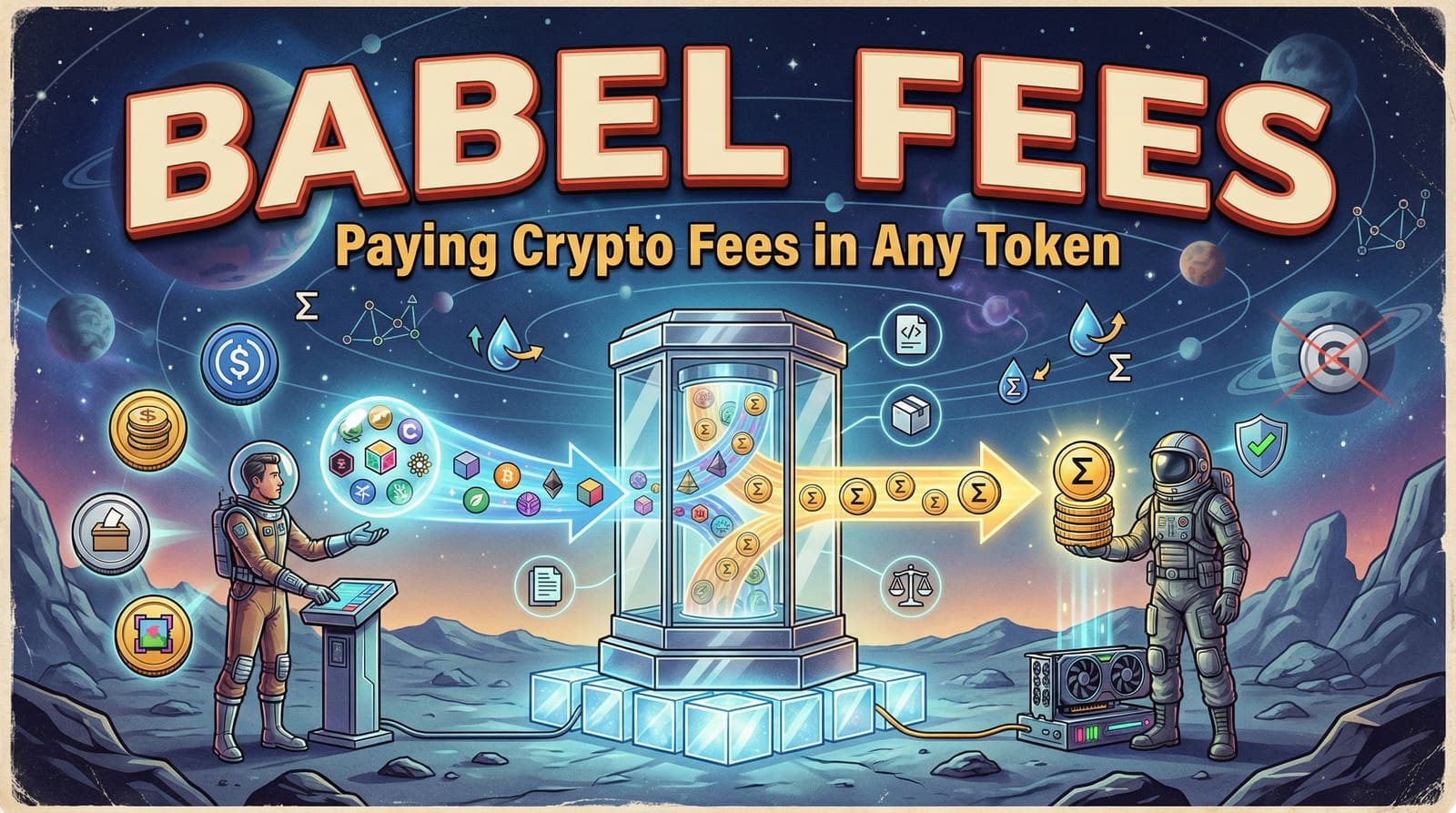
Babel Fees is an Ergo feature that enables users to pay transaction fees using tokens other than the native ERG. This is achieved through a marketplace where fee providers accept tokens in exchange for covering ERG fees. It dramatically improves UX for users who hold tokens but no ERG.
Key Points
- Pay fees in any accepted token
- No need to hold ERG for transactions
- Marketplace of fee providers
- Improves onboarding experience
- Works with native tokens
- Decentralized fee abstraction
Use Cases
1
New users without ERG can transact
2
Stablecoin-only wallets
3
Gaming tokens for in-game fees
4
Simplified DeFi onboarding
Technical Details
Babel Fees work through a two-step process: users create a transaction paying in tokens, fee providers see these requests and submit the actual transaction (paying ERG fees) while receiving the offered tokens. This creates a decentralized marketplace for fee payment.
Related Infographics
Related Articles
Frequently Asked Questions
Questions about Babel Fees
Common questions about this topic
How to get started with Ergo?
Start by getting a wallet (Nautilus for browser, Terminus for mobile). Back up your seed phrase securely offline. Get some ERG from a current exchange or verified venue, then make a small test transaction. After that, explore NFTs, mining, DeFi references, or the developer stack if you're a builder.
How-to
Getting Started
How to provide liquidity on Ergo?
Providing liquidity on Ergo depends on the current active DEX or AMM venue. In general, you deposit equal value of two assets into a pool, receive LP tokens representing your share, and earn a portion of trading fees. Spectrum Finance is historical/frozen since February 2024, so verify the active venue, contracts, liquidity depth, and withdrawal process before depositing funds.
How-to
DeFi
Is Ergo a good investment?
This is not financial advice. Ergo has strong fundamentals: fair launch (no VC dump risk), innovative technology (eUTXO, Sigma Protocols, NiPoPoWs), active development, and a cypherpunk ethos. It's a smaller market cap project with higher risk/reward than established chains. Research thoroughly, understand the technology, and never invest more than you can afford to lose.
Comparison
Getting Started
What is storage rent on Ergo?
Storage rent is Ergo's mechanism for long-term sustainability. Boxes (UTXOs) that remain unspent for ~4 years pay a small fee, which goes to miners. This prevents state bloat, recirculates lost coins, and ensures miners have income even after emission ends. It's like paying rent for blockchain storage space.
Explainer
Technology